






Stretching is a simple yet powerful way to improve your physical health and overall well-being. Whether you’re new to exercise or looking to add easy flexibility routines to your day, stretching at home is accessible for everyone. This beginner’s guide will walk you through the basics, benefits, and practical tips to help you stretch safely and effectively.
Why Stretching Matters
Stretching helps increase your flexibility, range of motion, and circulation. It can reduce muscle stiffness and soreness, improve posture, and lower the risk of injury during activities. Many people also find stretching to be relaxing and a helpful way to relieve stress.
Incorporating stretching into your daily routine can enhance your mobility and support other types of exercise, such as walking, running, or strength training.
Getting Started: Things to Know Before You Stretch
Before jumping into stretches, it’s important to keep a few points in mind:
– Warm up first: Stretching cold muscles can cause injuries. Do 5-10 minutes of light activity like walking or marching in place before stretching.
– Stretch gradually: Avoid bouncing or forcing a stretch. Gently ease into the stretch until you feel mild tension, not pain.
– Hold and breathe: Hold each stretch for 15-30 seconds and breathe deeply, relaxing into the position.
– Be consistent: Stretching regularly, even a few minutes a day, yields the best results.
Basic Stretching Routine for Beginners
Here’s a simple routine you can try at home, requiring no equipment or special space.
1. Neck Stretch
– Sit or stand with a straight back.
– Slowly tilt your head toward your right shoulder until you feel a gentle stretch on the left side.
– Hold for 20 seconds, then switch sides.
2. Shoulder Rolls
– Stand with feet hip-width apart.
– Roll your shoulders forward in a circular motion 10 times.
– Reverse the direction and roll shoulders backward 10 times.
3. Cat-Cow Stretch
– Start on your hands and knees in a tabletop position.
– Inhale, arch your back, lifting your chest and tailbone (Cow Pose).
– Exhale, round your spine, tucking your chin and tailbone (Cat Pose).
– Repeat 8-10 times.
4. Seated Forward Bend
– Sit on the floor with your legs extended straight.
– Slowly hinge at your hips and reach toward your toes.
– Keep your back straight and stop when you feel a comfortable stretch.
– Hold for 20-30 seconds.
5. Standing Quadriceps Stretch
– Stand tall, holding a chair or wall for balance if needed.
– Bend your right knee and bring your heel toward your buttocks.
– Grab your ankle with your right hand, keeping knees close.
– Hold for 20 seconds, then switch legs.
6. Hamstring Stretch
– Lie on your back with one leg extended on the floor.
– Lift the other leg up, holding behind your thigh.
– Keep your lifted leg as straight as possible without pain.
– Hold for 20-30 seconds and switch legs.
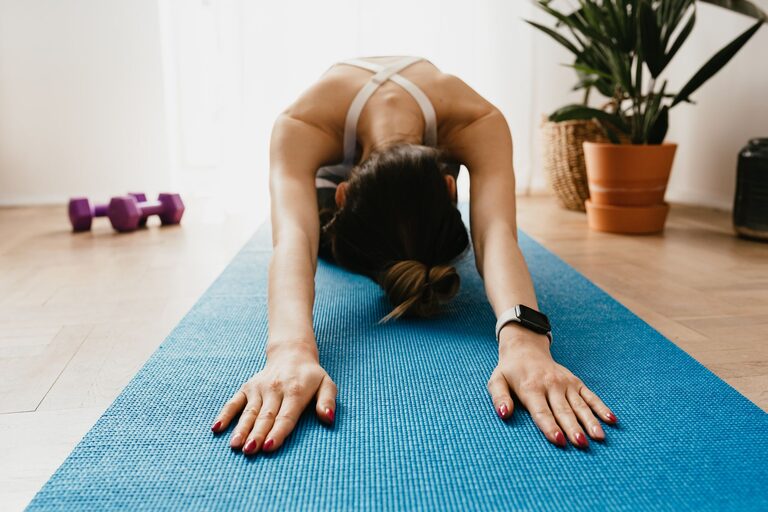
7. Child’s Pose
– Kneel on the floor, sit back on your heels, and stretch your arms forward on the floor.
– Lower your forehead toward the ground.
– Hold and breathe deeply for 30 seconds.
Tips for a Successful Stretching Practice
– Create a relaxing space: Find a quiet spot at home with enough room to move comfortably.
– Use a mat or towel: This adds comfort, especially for floor stretches.
– Stay hydrated: Drinking water helps maintain muscle elasticity.
– Wear comfortable clothing: Loose or stretchy clothes allow unrestricted movement.
– Listen to your body: Stretch only to the point of mild tension, never sharp pain or discomfort.
– Track your progress: Keep a stretching journal or use a simple app to stay motivated.
When to Stretch
Stretching can fit into your routine at various times:
– Morning: Helps wake up muscles and prepare you for the day.
– Before exercise: A short warm-up stretch can prevent injury.
– After exercise: Stretching cold-downs improve flexibility and reduce soreness.
– Evening: Gentle stretches can ease tension and improve sleep quality.
Common Stretching Mistakes to Avoid
– Bouncing: Rapid movements can cause muscle strain.
– Holding breath: Remember to breathe calmly and deeply.
– Overstretching: Avoid pushing beyond your comfort level.
– Skipping warm-up: Stretching cold muscles may lead to injury.
– Ignoring pain: Sharp or sudden pain is a sign to stop immediately.
Conclusion
Stretching at home is a great way to improve your flexibility, reduce muscle tension, and promote relaxation. Starting with simple, gentle stretches and practicing them regularly can make a big difference in how your body feels throughout the day. Remember to listen to your body, stay consistent, and enjoy the benefits of moving more freely.
Ready to add stretching to your routine? Grab a mat, find a quiet corner, and start with these beginner stretches today!